Your dog isn't being bad.
She's being bored.
She's being bored.
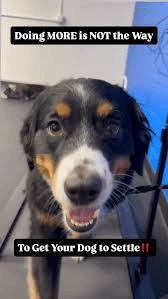
A step-by-step training program that turns 15 minutes of daily mental games into a dog who listens, settles down on her own, and actually looks at you instead of the squirrel.
You’ve tried treats, timeouts, YouTube videos. The barking still happens at 6am.
Most dog training fails because it targets behavior without touching the root cause. You tell your dog “no.” He stops. Then does the same thing again in four minutes because nothing about his inner world has changed.
A bored dog is a misbehaving dog. Not a bad dog. The difference matters, because the fix is completely different.
How it works
Games first. Obedience follows automatically.
The program is built in levels — like a video game your dog can actually win. Each level introduces new cognitive challenges: memory games, impulse control puzzles, scent tasks, and coordination drills. You play them together for 10–20 minutes a day.
Here's what's quietly happening underneath the games:
| What's happening | Why it matters | |
|---|---|---|
|
●
|
You become the most interesting thing in the room When you're the source of the fun, your dog starts choosing you over every distraction — not because she's commanded to, but because you're genuinely worth it. |
Better recall
Dog responds to her name even around distractions, strangers, and other animals. |
|
✓
|
Her brain gets tired in the right way 20 minutes of mental work equals 2 hours of physical exercise for a dog's nervous system. A tired mind is a calm dog. |
Calm evenings
No more chewing, zoomies, or barking for attention after you've been out all day. |
|
🔒
|
Impulse control builds automatically The games are designed to practice "wait," "think," and "check in" — so the behavior you want starts happening without you asking for it. |
No more jumping
Sits at the door before guests enter. Waits before eating. Pauses before crossing the street. |
|
●
|
No corrections. No fear. No suppression. Force-free and science-backed. The behavior changes because the dog's internal state changes — not because she's scared of getting it wrong. |
Lasting change
Behavior sticks whether you're in the room or not — because the dog actually wants to behave, not just avoid correction. |
Common questions
Before you decide
|
Age My dog is 7 years old. Is it too late? No. Cognitive enrichment benefits dogs at every age. Older dogs often respond faster because they're calmer learners. Many owners of senior dogs report the biggest transformations of all. |
|
|
Anxiety & reactivity My dog is extremely reactive / anxious. Will this help? Yes — this is actually where the program shines. Reactivity and anxiety are almost always symptoms of an under-stimulated mind. The games lower the nervous system's baseline arousal over time, which reduces overreaction to triggers. |
|
|
Timeline How long until I see results? Most owners notice calmer evening behavior within the first week. Specific behaviors like leash pulling and door manners typically shift within 2–4 weeks of consistent play sessions. |
|
|
Why different I've tried other programs and nothing stuck. Why is this different? Most programs train you to correct behavior. This one changes what the dog wants to do. When the motivation changes, the behavior change is permanent — not contingent on your presence, your tone of voice, or your timing with a treat. |